Who Can Benefit from ABA Therapy?
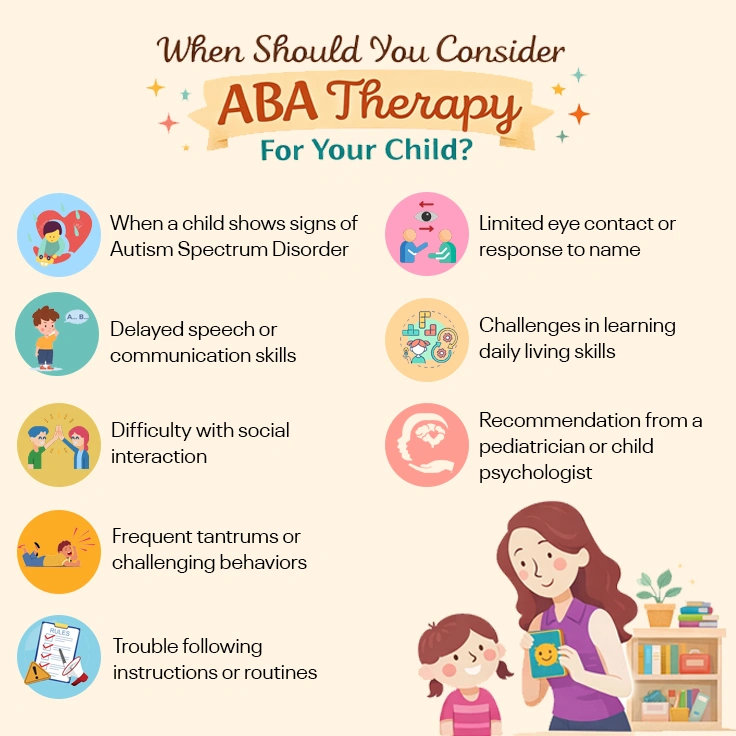
ABA therapy is especially effective for children with:
Autism Spectrum Disorder (ASD)
Developmental delays and intellectual disabilities
Social communication difficulties
Behavioral challenges (aggression, tantrums, self-stimulatory behaviors)
Difficulty with transitions and routines
Limited play, social, or self-help skills
Our ABA Therapy Services
Behavior Intervention Plans
We develop structured plans to address challenging behaviors, replacing them with positive alternatives.
Communication Training
ABA supports both verbal and non-verbal communication, including use of AAC (Augmentative and Alternative Communication) tools.
Social Skills Development
Role-play, guided practice, and group activities help children learn turn-taking, sharing, and conversational skills.
Daily Living Skills
Step-by-step teaching for self-care routines like dressing, brushing, toileting, and eating independently.
Early Intervention Programs
For toddlers and preschoolers, early ABA intervention can significantly improve language, play, and learning outcomes.
Parent Training & Home Plans
We equip parents with ABA techniques so progress continues outside therapy sessions.
How ABA Therapy Works at Nupal CDC
Step 1: Functional Assessment
We begin with a Functional Behavior Assessment (FBA) to identify triggers, strengths, and areas of need.
Step 2: Goal Setting
Clear, measurable goals are set—for example, improving communication, reducing tantrums, or building self-help skills.
Step 3: Structured Therapy Sessions
Children engage in structured, play-based sessions with positive reinforcement for each success.
Step 4: Data Collection & Review
Therapists track progress in real time and adjust strategies as needed.
Step 5: Parent Involvement
Parents are trained in ABA principles to reinforce consistency at home and school.
Benefits of ABA Therapy
Improved communication skills
Better emotional regulation and behavior control
Greater independence in daily routines
Increased social participation and friendships
Enhanced school readiness and learning
Reduced disruptive behaviors
Long-term improvement in quality of life
Why Parents Trust Nupal CDC
Nupal CDC is one of the few centers in Delhi offering specialized ABA therapy integrated with other child development services. Parents value our structured approach, transparent progress reports, and the way we actively involve families in therapy. Our child-friendly environment ensures ABA sessions feel safe, engaging, and rewarding.
Location & Accessibility
Conveniently located in Delhi, Nupal CDC offers accessible therapy spaces designed to encourage active participation. Families across NCR trust us for high-quality, evidence-based ABA therapy
Addressing Parents’ Concerns
Understanding the benefits — We explain clearly how ABA builds communication, reduces problem behaviors, and improves independence.
Therapist qualifications — All ABA programs are led by trained behavior therapists under the supervision of certified psychologists.
Cost and coverage — Fees are transparent; receipts and documentation are provided for possible reimbursement.
Family involvement — Parents receive hands-on training and home plans to reinforce therapy goals daily.
Related Concerns: Receptive & Learning Difficulties
Children with autism and developmental conditions may also face receptive language or learning difficulties—struggling to understand instructions or process information. At Nupal CDC, ABA therapy works in collaboration with speech therapy and occupational therapy to address these challenges holistically.
At Nupal CDC, we believe that every child deserves the power to express themselves. Our Applied Behavior Analysis (ABA) services in Delhi are designed to unlock communication, confidence, and connection for your child.
CALL TODAY TO HAVE INITIAL CONSULTATION (+91) 9910388103
Email: info@nupalcdc.com
Visit us: B-180 First Floor, Gujranwala Town Part 1, Delhi 110009, India
Reviewed by: Nupal CDC Team
Last reviewed: October 8, 2025