Who Can Benefit from Low Vision Services?
Our low vision rehabilitation program supports children with:
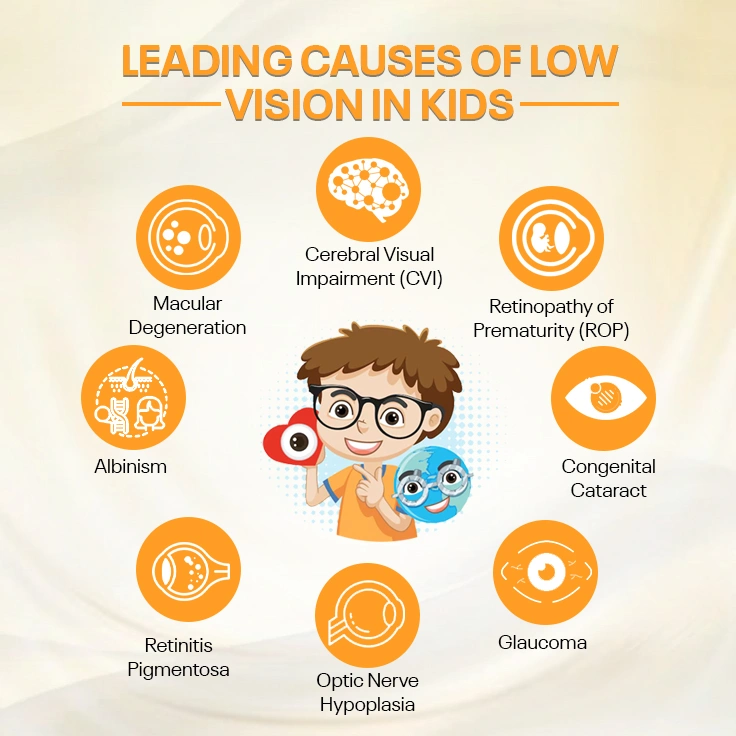
Cortical Visual Impairment (CVI)
Congenital or developmental visual impairments
Refractive errors not fully corrected by glasses
Vision loss due to neurological conditions
Low vision linked with cerebral palsy or developmental delays
Challenges in tracking, focusing, or recognizing objects
If your child struggles with eye contact, responding to visual cues, or navigating environments, vision therapy and rehabilitation may help.
Our Low Vision & Rehabilitation Services
Functional Vision Assessment
We evaluate how your child uses their vision in daily life—tracking, focusing, recognizing objects, and responding to light or movement.
CVI-Specific Therapy
Structured, evidence-based activities that help children with Cortical Visual Impairment improve visual attention and processing.
Visual-Motor Integration Training
Activities to strengthen the connection between what a child sees and how they move, essential for play, writing, and self-care.
Adaptive Skills Training
Teaching children strategies for independence, such as organizing belongings, safe mobility, and use of high-contrast materials.
Assistive Tools & Technology
Guidance on low-vision aids like magnifiers, large-print materials, or digital tools to enhance participation at school and home.
Parent Training
Parents are given strategies to create visually supportive environments—like reducing clutter, using contrast, and incorporating vision-building activities into routines.
How Low Vision Therapy Works at Nupal CDC
Step 1: Initial Consultation
A parent interview to understand the child’s visual history and challenges.
Step 2: Functional Assessment
Observation and testing of visual responses, tracking, and daily functioning.
Step 3: Personalized Plan
A customized program addressing the child’s unique vision needs.
Step 4: Regular Sessions
Therapy sessions that combine visual stimulation, motor activities, and adaptive techniques.
Step 5: Progress Reviews
Regular follow-ups to track progress and update strategies as the child develops.
Benefits of Low Vision & CVI Services
Improved ability to use functional vision in daily activities
Better eye-hand coordination and movement
Greater independence in learning, play, and self-care
Increased attention and participation at school
Confidence in navigating different environments
Family-friendly strategies for home and classroom support
Why Parents Trust Nupal CDC
Nupal CDC is recognized for its specialized focus on Cortical Visual Impairment and pediatric vision care. Parents trust our expertise, compassionate approach, and practical guidance that extends beyond therapy sessions. With an emphasis on teamwork between therapists and families, we ensure children are supported both in the clinic and at home.
Location & Accessibility
Our clinic in Delhi is fully equipped with therapy tools, adaptive aids, and child-friendly spaces to make vision therapy safe and engaging. Families from across NCR visit us for our specialized CVI expertise.
Addressing Parents’ Concerns
Understanding the benefits — Parents often want clarity on how therapy will help daily life. We explain goals and share progress updates.
Therapist expertise — Our lead therapist is a CVI specialist with years of pediatric experience.
Costs and coverage — Fees are transparent; receipts and reports are provided for reimbursement options.
Family involvement — Parents are trained in practical, home-based strategies to continue visual development outside sessions.
Language, Perception & Related Concerns
Some children with low vision may also face receptive or perceptual difficulties, such as challenges in processing what they see or combining vision with movement. Our integrated approach ensures these areas are addressed with support from occupational and speech therapists where needed.
CALL TODAY TO HAVE INITIAL CONSULTATION (+91) 9910388103
Email: info@nupalcdc.com
Visit us: B-180 First Floor, Gujranwala Town Part 1, Delhi 110009, India
Reviewed by: Nupal CDC Vision Team
Last reviewed: October 5, 2025