
How to Know Your Toddler Needs Speech Therapy From Experts?
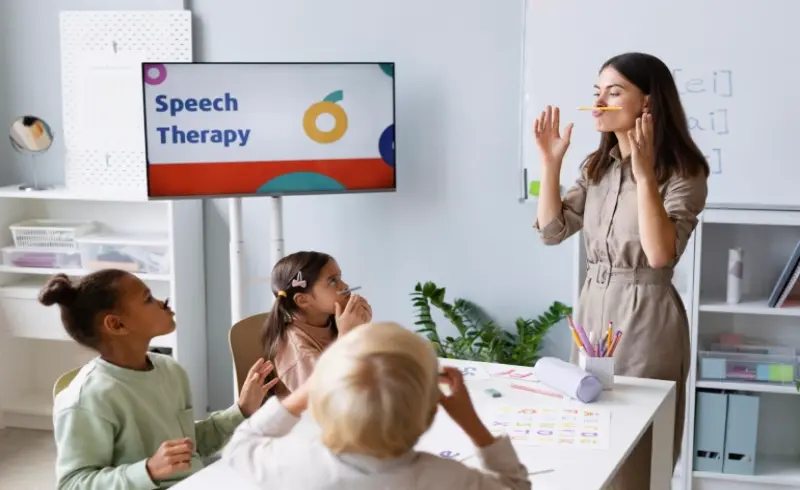
Speech Therapy for Children
11 Feb, 2026
Witnessing your child growing step-by-step and exploring the world is an undefined journey, filled with unconditioned firsts, whether it's their first smile, first cry, first steps, or eagerly watching their first words. As those milestones grow as expected, this is a reason to celebrate. However, have you ever wondered what happens when you notice that your toddler’s communication seems a little different from that of other toddlers? These essential observations can naturally lead to important questions and concerns. Well! You are not alone. Many parents feel the same way and mainly opt for the best speech therapy in Delhi.
Furthermore, early intervention through speech therapy for kids in Delhi ensure to addres speech sound disorders, social communication challenges, and language delays. If you notice early signs of speech delays, seeking professional help can make a significant difference in your child's growth and development. Moreover, in this comprehensive blog post, we will discuss the key signs that indicate your child is experiencing speech delays and needs expert guidance.
What is Speech Therapy?
Speech therapy in Delhi aims to enhance communication skills, whether verbal or nonverbal. Furthermore, speech-language pathologists work with kids who are facing challenges with:
1. Speech sounds
2. Fluency
3. Voice
4. Language Growth & Development
5. Social Interaction
Whether helping a child develop language skills or supporting individuals of all ages in achieving their communication goals, speech therapy plays an essential role. Nevertheless, this therapy offers imperative benefits for kids experiencing speech and language challenges.
Signs that Your Toddler Needs Expert Speech Therapy
A common concern among parents today is: "Why isn't my toddler understanding or conveying anything?" Therefore, every child learns at their own pace, but there are clear signs that expert, necessary speech therapy for kids in Delhi is needed. These should be identified as early as possible, as the earlier the intervention, the stronger the effect.
1. Toddlers Communicating with Vocabulary Below Their Age Bracket
So, this could be your major indicator: if your toddler has crossed 18 months and is rarely saying any meaningful words, like "mama" or "dada," or not at all. In normal development, words are picked up bit by bit, and a simple vocabulary begins to form well before the age of 2. Also, if the growth of words seems almost at a standstill, then the expert speech therapist can evaluate whether the delay is a simple one or a deeper one.
2. Inability to Use Two-Word Phrases, Even at Age 2
At about age 2, children begin speaking two-word phrases. If your child is near or past age 2 and has not shown consistent progress beyond single words or uses only gestures, therapy may help. Therefore, the aim of the best speech therapist in Delhi is to support the child's voice and further develop their speaking skills, including vocabulary, gestures, and eye contact.
3. Relying mainly on Pointing, Crying, or Gestures for Communication Across
This is a very instinctive use of gestures by your toddler, but if your child meets his needs mostly by pointing, pulling your hand, or crying rather than using words, this should raise concern. Sometimes a child understands what he is being told but is shy to speak or has difficulty with speech. A speech therapist online consultation is the best way to determine whether the problem is with expressive language, oral-motor skills, or confidence.
4. Inability to Follow Directions
There is a difference between delayed speech and language delay. If your toddler isn't saying the words but is understanding them, it's a different situation. However, if you feel that your child doesn't consistently follow simple directions such as "get the ball" or "say bye-bye," this may indicate a receptive language issue. In such a case, early intervention with the best speech therapist in Delhi is essential.
5. The Child Makes Sounds, but the Words Are Not Clear
In lots of toddlers, lots of babbling is going on "da-da-da," "ba-ba-ba"-but no words form. Sometimes he does speak, but most of it is unclear, and even parents have to make guesses. By 2–3 years of age, speech can be intelligible for 50 percent of the listeners. If your child talks but cis ompletely unintelligible, definitely articulation or phonological delay is setting in, and speech therapy in Delhi is a must.
6. Difficulty with Social Interaction
Prior social interaction primarily involves eye contact, responses, and name-calling. Speech therapy covers pronunciation aspects and is a comprehensive package in itself, including communication.
However, if your toddler:
1. Does not respond to own name
2. Doesn't catch one's eye
3. Weak in joint attention-the one points at something to him/her, and he/she does not share
4. Spends most of his time playing alone.
This could be an indication of an articulation delay. An online consultation with an expert speech therapist will help pinpoint such patterns with clarity, provide direction, and, where needed, enable multidisciplinary intervention.
7. Frustration Because of Communication Problems
The child had speech, but he no longer does. It is treated as the most serious sign. However, if your toddler used to utter a few words earlier, but suddenly those words have vanished, or the speech has reduced too much, that cannot be neglected at all. Regression means the child loses a skill he previously acquired, which is not typical for his age. In this condition, a speech therapist online consultation is urgently needed to identify the underlying cause and initiate therapy as early as possible.
It’s Time To Wrap Things Up!
Identifying early signs that your child may need expert speech therapy can significantly enhance their speech and communication development. Furthermore, we hope this comprehensive blog has provided you with the precise details on the essential symptoms every parent should notice. Likewise, if you have noticed these warning signs, it is vital to opt for speech therapy in Delhi. When it comes to finding the best professionals with top-notch assistance for your children, look no further than Nupal CDC. We provide end-to-end guidance for your children to help them improve their speech and address language delays. So, what are you waiting for? Consult with our experts today!
Frequently Asked Questions
Q1. When Should a Child See a Speech Therapist?
Ans: If you are aware that your child is not reaching speech milestones, speech therapy can be initiated as early as 12-18 months. It is always best to seek speech therapy, regardless of age, especially if the child is having difficulty speaking, understanding words, forming sentences, or if the child stutters. The best time to start is early, so results can be achieved quickly.
Q2: Does Speech Delay Mean Autism?
Ans: No, not necessarily. Speech delay may be common in autism, but there are many other causes of speech delay. The good news is that speech delays can be improved through early intervention and speech therapy.
Q3: How Serious is a Speech Delay?
Ans: At times, this may be normal. At other times, the child may need appropriate assistance from a speech-language expert. There are also situations where speech delay is just a symptom of a hearing impairment, developmental delays, or Autism Spectrum Disorder.
Q4: Is Speech Delay Genetic?
Ans: Yes. There is evidence that difficulties with speech and language may be hereditary. Scientists have identified genes that might influence speech and language development.
Leave a comment