
How Do Language Disorders in Children Affect Their Academic Life?
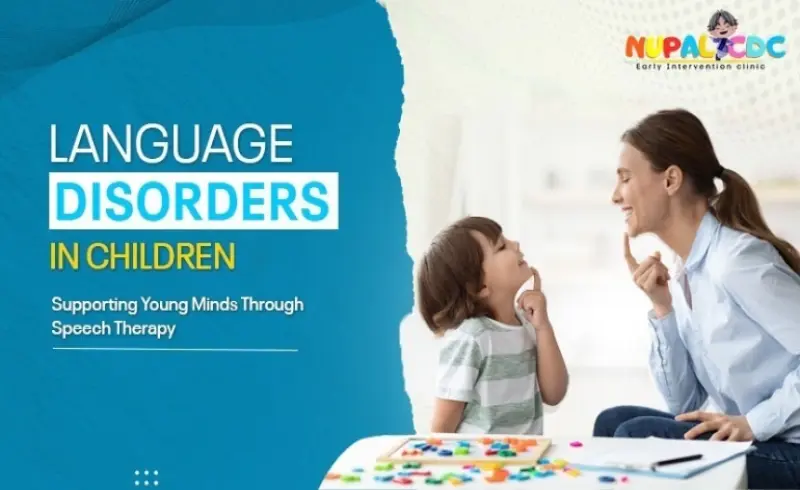
Speech Therapy for Children
12 May, 2026
The chances are high that your child is going through communication difficulties if you have a kid who is dealing with a language disorder. As parents, you need to be very mindful that language disorders in children never have to face any difficulties in their academic success, especially when something is not in your child’s control. Furthermore, language is the basis of all types of communication. It impacts how we communicate with others, witness the world around us, express what we feel, and study, adapt, interpret, and understand details.
Nevertheless, in India, nearly 8% of all children between the ages of 2 and 18 are facing language, voice, and speech disorders. Thus, in the real world of academia, these kids are more likely to struggle, leading to poor grades. Also, a lack of language development for early childhood might lead your kids to experience low self-esteem, less socialization, and a lack of confidence. Moreover, in this comprehensive blog, we will discuss the various ways language disorders affect children's academic lives.
What are Language Disorders in Children?
Language disorders in children lead to endless difficulties with understanding, adapting to, learning, or using spoken or written language, affecting communication and academic performance. Additionally, these disorders, often referred to as Development Language Disorder (DLD), involve challenges with vocabulary, sentence structure, and conversational skills. They are typically classified as receptive (understanding) or expressive (using) disorders, or a mix of both.
Key Types of Language Disorders in Kids
1. Receptive Language Disorder
- Kids often face challenges with understanding what others say, following directions, or grasping concepts. For instance, a child struggles to follow simple two-step instructions such as “Get your shoes and put them by the door.”
2. Expressive Language Disorder
- In this language disorder, kids find it difficult to put their thoughts into words, have a limited vocabulary, or have improper grammar. For example, a child uses simple, short phrases, skips words, such as “is” or “the,” or cannot find the right words to tell a story.
3. Mixed Receptive-Expressive Language Disorder
- In language development for early childhood, kids often face challenges in both understanding and using language if they have a language disorder.
4. Pragmatic Language Disorder
- In this language disorder, kids struggle with the social use of language, such as turn-taking in conversation or understanding non-verbal cues.
Vital Affects Children with Language Disorders Face in Their Academic Life
Language disorders are usually diagnosed in childhood. At the same time, many schools and educational institutions are not prepared to address the particular needs of such students. Moreover, the difficulties associated with the disease go far beyond problems with oral speech. They affect all stages of information acquisition, perception, organization, and output. Therefore, children may encounter significant barriers in the process of language development for early childhood, including the following aspects:
1. The Literacy Challenge
Both reading and writing are the transcription of language skills in graphic form. If the child already has difficulty distinguishing phonemes or understanding complex sentences, mastering literacy becomes extremely complicated. Most of them suffer from poor phonological awareness, making it difficult to establish links between sounds and their symbols. Therefore, reading becomes slow and exhausting, requiring additional efforts for comprehension due to cognitive overload. As a result, they may not be able to grasp the main ideas of texts because they spend all their brainpower deciphering words and grammatical constructions.
2. Difficulties with Following Multi-Step Instructions
Educators usually speak rapidly in the classroom, giving several actions simultaneously: "Get out your notebooks, turn to page ten, and write the date." Such a combination of tasks poses serious difficulties for children with language disorders. They may memorize only one piece of information, although they pay full attention to the educator's words. The cause of this problem is associated with information processing in the brain rather than a lack of attention.
3. Limited Vocabulary and Conceptualization
Educational programs rely heavily on specialized vocabularies. Language disorders in children need to learn abstract words, verbs, adjectives, and subject-specific terminology, such as compare, analyze, and photosynthesis. However, language-disorder sufferers tend to have a narrower lexicon and have problems expanding it. Moreover, they may not fully understand the definitions and applications of certain concepts, further complicating learning in science and history classes.
4. Trouble with Narrative and Expressive Language
Expressing one's thoughts, retelling an episode from life, or creating a plot in writing requires logical thinking and the organization of ideas. Such activities are difficult for children with language disorders. They may jump abruptly from one thought to another, missing vital details from their narrative. Besides, in the absence of certain concepts in the active lexicon, they resort to using such general words as 'thing,' 'object,' or 'something.' In writing, it manifests as chaotic sentences that violate the rules of text structure.
5. Social Communication Skills and Implicit Norms
School is primarily a social environment where communication is the basis for interacting with other kids. Language disorders in children include problems comprehending the implicit norms of dialogue, such as turn-taking, appropriateness, humor, and irony. Moreover, they may miss gestures, mimicry, or facial expressions used in nonverbal communication. As a result, they may be unable to maintain relationships with other children due to a misunderstanding.
6. The "Wait-Time" Deficit
Children with language disorders require some time to think over the educator's question and compose an adequate response. While their peers quickly react to any queries, these children may lag behind. Often, they formulate their answers after their peers start doing other things. Consequently, they miss an opportunity to receive feedback from the educator. Over time, they begin to avoid participation in lessons to prevent embarrassing situations.
7. Emotional and Behavioral Issues Related to Language Disorders
It is psychologically challenging to have thoughts but be unable to express them, or to experience frequent misunderstandings. Such a state causes anxiety among most kids, which affects language development for early childhood. These children are uncomfortable communicating verbally, so they experience additional stress in a social environment like school. It results in behavioral disorders that may appear to educators as emotional and attention problems.
Symptoms that a Language Disorder Could Impact Your Child’s Learning
Here are some imperative signs that language disorders in children could severely affect your child’s learning phase:
1. Constantly struggling to follow multi-step verbal instructions in the classroom.
2. Children with language disorders use fewer words and have difficulty learning new vocabulary compared to other kids.
3. They face difficulty in mapping sounds to letters (phonological awareness), leading to reading and writing challenges.
4. If your child uses simple or grammatically incorrect sentence structure, they are most likely to face a language disorder.
5. Kids struggle to organize thoughts, tell stories, or explain ideas in a logical sequence.
6. Face difficulty in understanding complex language, questions, or instructions.
7. Deal with challenges in peer interaction, engaging, or understanding in conversations.
Prevent Language Disorder in Children & Empower Their Future with Nupal CDC!
The prevention of language disorders in children does not have to rely solely on early diagnosis. Instead, it has to do with nurturing competent, confident, and expressive children. With regular treatment, professional advice, and supportive surroundings, children will not only cope with these challenges but also reach their full potential. But in case you need a qualified professional who can help your children with speech and language disorders, you cannot go wrong with Nupal CDC. As such, we are here to assist you through personalized treatment approaches and much more.
Therefore, waste no more time. Contact us now to ensure your children become competent in the future.
Frequently Asked Questions
Q1. How will the language disorders influence academic performance?
Ans: Language disorders among children can greatly affect their learning and understanding of class lessons, as well as their ability to communicate what they know. The difficulties may be as follows:
- Inability to comprehend texts and express themselves through writing
- Not being able to follow instructions issued in class
- Inability to actively take part in class discussions and other activities
- Poor self-confidence among learners
Q2. What could be the symptoms of language disorders among kids?
Ans: Some of the common symptoms of language disorders include:
- Late speech or limited vocabulary for their age
- Inability to understand the given instructions
- Problems in formulating sentences and communicating one's ideas
- Poor storytelling and description skills
- Ineffective peer communication skills
Q3. Does language disorder impair the language abilities of kids?
Ans: Language disorders directly affect how children develop linguistic skills, specifically phonological awareness, which helps them recognize sounds and link them to letters, thereby affecting reading.
Q4. Do language disorders affect the social skills of the students in schools?
Ans: Socially, the affected students have difficulty comprehending social cues, conversations, sarcasm, tone of voice, jokes, and humor, thus limiting their ability to make friends.
Leave a comment